
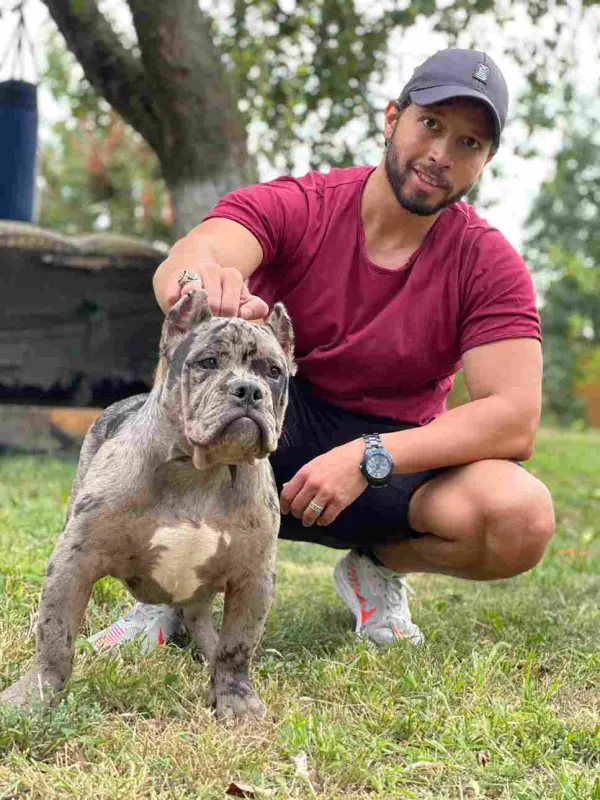
The American Bully is a muscular, confident companion dog with a surprisingly gentle heart. Bred for family life rather than work, it combines a powerful look with an affectionate, people-loving temperament. This guide explains where the breed comes from, the different size classes, what living with an American Bully is really like, and how to choose a healthy puppy.
Origin and History of the American Bully
The American Bully was developed in the United States from the late 1980s onward. Breeders started from the American Pit Bull Terrier and the American Staffordshire Terrier and added bulldog-type breeds to create a heavier, more compact dog with a calmer, more sociable temperament. The goal was a loyal family companion, not a working or fighting dog.
The breed was first recognised by the American Bully Kennel Club (ABKC) in 2004 and by the United Kennel Club (UKC) in 2013. Its popularity has grown quickly worldwide thanks to its striking appearance and friendly nature.
American Bully vs. Pit Bull: What Is the Difference?
Although they share ancestry, the two are not the same dog:
- Build: the American Bully is wider, heavier-boned and more compact; the Pit Bull is leaner and more athletic.
- Head: Bullies have a broader, blockier head and a shorter muzzle.
- Purpose: the Bully was bred as a companion; the Pit Bull has a working and sporting background.
- Energy: most Bullies are calmer indoors and need less intense exercise.
Size Classes and Physical Characteristics
The ABKC recognises four main size varieties, all sharing the same muscular frame, short glossy coat and wide chest:
- Pocket: males about 14–17 inches (36–43 cm) at the shoulder.
- Standard: males about 17–20 inches (43–51 cm).
- Classic: same height as the Standard but with a lighter, less bulky body.
- XL: males about 20–23 inches (51–58 cm).
Females are usually slightly smaller. Weight varies widely by class, from around 30 kg for smaller dogs to well over 45 kg for large XLs. All colours and patterns are accepted, including blue, black, fawn, tri-colour and merle (merle is not accepted by every registry).
Personality and Temperament
A well-bred American Bully is loyal, affectionate and eager to please. Most are gentle and patient with children and love being close to their family. They are confident rather than nervous, which makes them good watchdogs, but they are not naturally aggressive toward people.
Like any strong breed, a Bully needs early socialisation and consistent rules. Introduce your puppy to many people, places, sounds and other dogs during the first months, and always supervise play with small children and unfamiliar animals.
Health and Lifespan
The average lifespan is about 10–13 years. Common health concerns include:
- Hip and elbow dysplasia – choose puppies from parents with health checks.
- Skin allergies and dermatitis – often linked to food or environment.
- Breathing and heat sensitivity – especially in dogs with shorter muzzles.
- Eye conditions such as cherry eye and entropion.
- Weight gain – extra weight puts strain on joints and heart.
Regular vet check-ups, vaccinations, parasite prevention and a healthy weight are the best ways to keep your Bully healthy for life.
Grooming Needs
The short coat is easy to care for. Brush once a week with a rubber brush or grooming mitt, bathe every 4–8 weeks, trim nails monthly, check and clean the ears weekly, and brush the teeth several times a week. Bullies shed moderately, a little more in spring and autumn.
Exercise Requirements
An adult American Bully needs about 45–60 minutes of activity a day: two walks plus play such as tug-of-war, fetch or flirt-pole games. Mental exercise—training sessions, puzzle feeders and scent games—is just as important. Avoid hard exercise in hot weather, and do not force long runs or jumping on growing puppies, whose joints are still developing.
Nutrition and Diet
Feed a high-quality, protein-rich food suited to your dog's age and size. Puppies usually eat three to four meals a day, adults two. Keep portions controlled and use treats in moderation, because Bullies gain weight easily. Large XL dogs benefit from foods made for large breeds. Always provide fresh water, and avoid foods that are toxic to dogs such as chocolate, grapes, onions and xylitol.
Training and Socialisation
American Bullies are intelligent but can be stubborn. Short, fun sessions with positive reinforcement—treats, praise and play—work best. Start with house training, crate training and basic commands (sit, stay, come, leave it) as soon as your puppy comes home, and teach good leash manners early, because an adult Bully is very strong.
Living Environment
Bullies adapt well to both houses and apartments as long as they get daily exercise. They are indoor dogs that want to live with their family, not outside. Their short coat gives little protection against cold, and their build makes them sensitive to heat, so provide shade, water and a comfortable climate.
Raising an American Bully Puppy
- Puppy-proof your home: hide cables, shoes and small objects.
- Prepare a crate, bed, bowls, chew toys and puppy food before arrival.
- Keep the vaccination and deworming schedule from your breeder or vet.
- Start socialisation from day one, in a safe and positive way.
How to Choose an American Bully Puppy
Choose a breeder who shows you the parents or their records, provides health and vaccination documents, and raises puppies in a clean home environment. Ask about the parents' temperament and any health tests, and avoid puppies sold very cheaply with no documents. If you are buying from abroad, make sure the puppy travels with a pet passport or health certificate and all the vaccinations your country requires.
Cost of Owning an American Bully
Beyond the purchase price, plan for food, vet care, vaccinations, parasite prevention, grooming supplies, training and possibly pet insurance. Larger XL dogs eat more and may have higher vet costs, so budget accordingly.
Frequently Asked Questions
Are American Bullies good family dogs?
Yes. A well-socialised American Bully is affectionate, loyal and usually very gentle with children.
How big does an American Bully get?
It depends on the class: Pocket Bullies stay under about 17 inches, while XL Bullies can reach about 23 inches at the shoulder.
Can I import an American Bully?
Some countries restrict or ban certain bully-type dogs, including the XL. Always check your country's rules before buying. 50Dogs can advise you and handle international pet shipping, including documents and airline booking.
Looking for your own puppy? Browse our dogs for sale or tell us which breed you want and we will find a healthy puppy for you.