
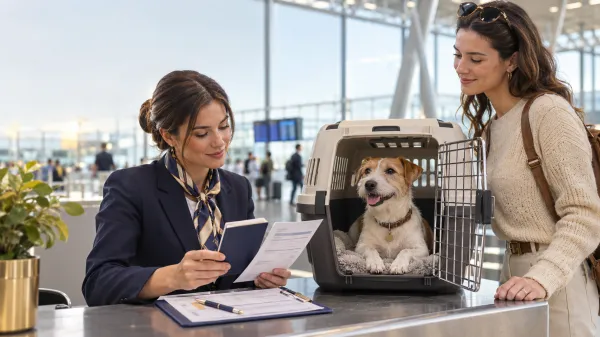
You have the crate, the tickets and the excitement — and then the airline says no. It happens more often than people think. In our short video we talk about the 5 things that can stop your pet from flying. Watch it first, then read the details below so nothing surprises you at the airport.
More videos on the 50 DOGS YouTube channel
1. A flat-faced (snub-nosed) breed
Breeds with a short nose — such as the French Bulldog, English Bulldog, Pug, Boston Terrier, Pekingese and Shih Tzu, and cats like the Persian and Himalayan — breathe less easily and get hot faster. Stress and heat in the cargo hold make this worse, so many airlines refuse these breeds in the cargo hold, and others accept them only in cool months or below a set temperature.
What helps: choosing an airline and route that still accepts the breed, a cooler time of year, a slightly larger, well-ventilated crate, and a vet check before the trip.
2. Your pet is too young
Age is one of the most common reasons a trip has to wait. Most countries need a rabies vaccination, and a pet must usually be at least 12 weeks old to get it. After the first rabies shot there is often a waiting period of at least 21 days before the pet may travel (for example into the European Union).
Some countries ask for more: dogs entering the United States must be at least 6 months old and microchipped. A puppy that is too young will simply not be accepted, even with a ticket.
3. Missing or wrong documents
One small mistake on paper can cancel the whole trip. The most common problems:
- Microchip: it must be put in before (or on the same day as) the rabies vaccination, or the vaccination may have to be done again.
- Vaccination dates: an expired rabies vaccine, or a booster given too late, can restart the waiting time.
- Health certificate: it must be issued by an approved vet within a short time before travel (for the EU, within 10 days of arrival).
- Extra papers for some countries: a rabies blood test (titer), an import permit, or an online form such as the CDC Dog Import Form for the USA.
4. Health problems on the day
Airlines and vets want a pet that is fit to fly. A pet that is sick, injured, very weak, recently operated on, or in late pregnancy can be refused at check-in. Sedatives are not allowed by most airlines, because they can make breathing harder in the air — so please never give calming medicine without your vet's advice.
5. The wrong crate — or the weather
Your pet must be able to stand up, turn around and lie down comfortably in its crate. A crate that is too small, broken, or missing water bowls and proper locks is a common reason for refusal. Weather matters too: many airlines stop carrying pets when it is too hot or too cold at any airport on the route, especially in summer.
Good to know: breed and country rules
Besides these 5 points, some countries and airlines do not accept certain strong or "dangerous" breeds at all, and rules can change during the year. That is why every route should be checked before you book.
Let 50Dogs check everything for you
At 50Dogs we plan the whole trip: the right airline and route for your pet's breed, the right timing for age and vaccines, all documents, and a crate of the correct size. You tell us where your pet is and where it is going — we take care of the rest.
Request pet shipping with 50Dogs →
Rules differ between countries and airlines and can change. The points above are general guidance (checked November 2026); we confirm the exact rules for your route before you travel.